

Top 8 Trends of Cross Border Ecommerce Fulfillment Between MILTON ONT And Buffalo NY – Call 716-823-2142
Ever feel like your ecommerce orders are growing faster than your ability to actually ship them?
You’re building something great. But your fulfillment process keeps tripping you up: slow deliveries, messy customs paperwork, and costs that creep higher every month.
Shipping across the Canada-US border makes it worse. Delays, surprise fees, and inventory headaches can quietly eat into your profits.
Here’s the discovery that’s changed things for a lot of business owners like you: the Milton, Ontario to Buffalo, New York corridor. Buffalo fulfillment centers can reach 40% of North America’s population within a one-day drive, and they sit just 10 minutes from the Peace Bridge.
That kind of location turns MILTON ONT Ecommerce Fulfillment into something much bigger than a shipping plan. It becomes a real growth strategy.
In this guide, I’ll walk you through eight trends reshaping cross-border ecommerce fulfillment right now. You’ll see how bonded warehousing trims your customs costs, how cross-docking slashes warehousing expenses by 18%, and how real-time tracking keeps your customers coming back.
Grab a coffee. Let’s go through exactly what’s working for successful brands today.
Key Takeaways
- Buffalo fulfillment centers reach 40% of North America’s population within one day, giving you massive market access from the Milton-to-Buffalo corridor.
- Duty deferral strategies cut monthly customs fees from $1,953 to $651, saving your business real money through bonded warehousing and Foreign Trade Zone benefits.
- Cross-docking infrastructure cuts fulfillment costs by 50% while speeding up deliveries by 40%, dropping storage days from 5.2 to 1.1.
- Real-time API integration and inventory visibility stop overselling and stockouts while delivering the tracking 64% of your customers expect across every sales channel.
- Omnichannel fulfillment through one 3PL provider saves 30 to 40 percent for operations managing up to 1,000 monthly orders across direct-to-consumer, retail, and marketplace channels.
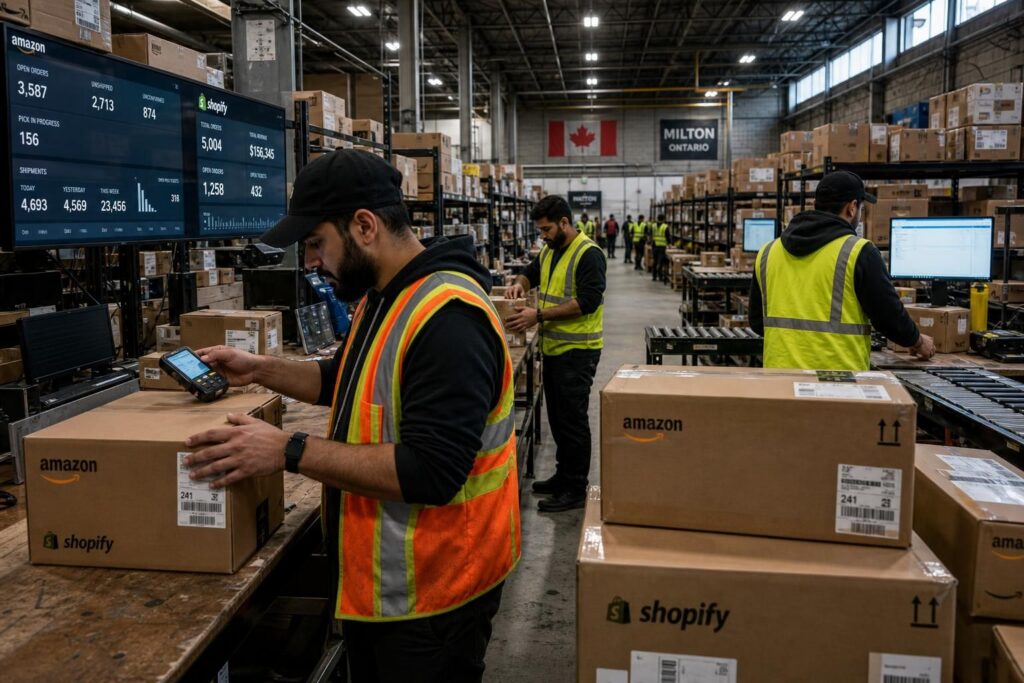
Why the MILTON-to-BUFFALO Corridor Is Ideal for Cross Border Ecommerce Fulfillment
Running your business from the Milton, Ontario to Buffalo, New York corridor gives you a serious edge in cross-border ecommerce fulfillment. This corridor sits just 10 minutes from the Peace Bridge, so your shipments cross the border with barely a hiccup.
That location alone puts 40% of North America’s population within a one-day drive. Your products reach far more customers than a single-market warehouse ever could.
Here’s what that geography actually gives you:
- Access to more than 370 million consumers across North America from one hub
- Same-day or next-day shipping into major US cities
- Bonded warehousing through the Western New York Foreign Trade Zone (WNYFTZ) that defers duties and lowers your fulfillment costs
- Cross-docking infrastructure that cuts fulfillment costs by up to 50% and speeds up delivery by 40%
MILTON ONT cross-border logistics lets you serve customers in two countries without juggling separate warehouses in multiple cities. Same-day and next-day shipping also means fewer abandoned carts, since customers trust their order will actually show up fast.
Businesses running through this corridor see the difference in their margins almost right away. When your fulfillment costs drop and your delivery speed climbs, your whole operation runs smoother.
Trend #1 – Faster Same-Day and Next-Day Delivery Into the US Market
Your customers want speed. The Milton ONT to Buffalo NY corridor delivers exactly that.
The North America Same Day Delivery Market is projected to hit USD 15.47 billion by 2031, growing at a 5.92% CAGR. That growth shows how critical fast shipping has become for online retailers like you.
Seventy-four percent of online shoppers now expect delivery within two days. That’s not a nice-to-have anymore. It’s the price of entry.
- Buffalo fulfillment centers reach most US cities within two days
- The corridor sits just 10 minutes from the Peace Bridge, cutting customs delays
- Buffalo’s position puts 40% of North America’s population within a one-day drive
That proximity matters for your bottom line. Fewer delays mean fewer costs eating into your margins, and faster delivery means happier customers.
Speed builds trust. And trust turns into repeat orders and loyal customers.
A Milton ONT 3PL services partner can use this geography to compress your delivery times in ways a single-country warehouse never could. Up next: how lower customs costs through bonded warehousing complement all that speed.

Trend #2 – Lower Customs Costs Through Bonded Warehousing and Duty Deferral
You can slash your customs costs through bonded warehousing and duty deferral in the Milton ONT cross border logistics corridor. Instead of paying duties the moment your goods hit the border, you defer that payment until products actually sell.
This shift changes your cash flow in a big way. A 2025 FTI Consulting study found that duty deferral strategies can reduce monthly customs fees from $1,953 down to just $651, which adds up to real savings every month.
Here’s why that matters more than ever right now. As of August 29, 2025, the US government fully suspended the Section 321 de minimis exemption for all countries, so low-value shipments under $800 no longer clear duty-free. In February 2026, officials confirmed this suspension is permanent, and the One Big Beautiful Bill Act will phase the exemption out completely by July 2027.
That regulatory shift is exactly why bonded warehousing and FTZ duty deferral matter more today than they did a few years back. Foreign Trade Zones (FTZ), like WNYFTZ in Erie County, NY, make these bonded warehousing benefits available to your ecommerce fulfillment operation.
Qualifying inventory stored in an FTZ is exempt from state and local inventory taxes, according to the National Association of Foreign Trade Zones. Goods that get re-exported or destroyed within the FTZ face zero duties, which wipes out those costs entirely.
Duty deferral strategies can reduce monthly customs fees from $1,953 to $651, saving businesses significant amounts.
Here’s what that looks like in practice for a seller moving consumer electronics.
| Metric | Before Bonded Warehousing | After Duty Deferral |
|---|---|---|
| Monthly customs outlay | $1,980 | $660 |
| MPF exposure per entry | $700 (weekly entry) | $260 (consolidated entry) |
| Net monthly cash flow improvement | $1,320 | |
One operations manager summed it up well: “Consolidating entries and deferring duties in-bond improved our monthly cash flow by more than twelve hundred dollars in this simulated scenario, freeing budget for marketing during peak months.”
Your Milton ONT cross border ecommerce fulfillment strategy gains real financial strength from weekly customs entries that minimize per-shipment fees and cap Merchandise Processing Fees (MPF).
WNYFTZ’s FTZ status gives you real financial benefits across the Milton-to-Buffalo corridor. You manage inventory more efficiently while cutting tariffs and taxes, and that means your company keeps more cash on hand during peak seasons to reinvest into growth.
Trend #3 – Reduced Fulfillment Costs With Cross-Docking Infrastructure
Beyond the customs savings that bonded warehousing provides, cross-docking infrastructure transforms how you move products through the Milton ONT to Buffalo NY corridor, cutting your fulfillment costs dramatically.
Cross-docking slashes per-order expenses from $6.40 down to $3.20, a remarkable 50% reduction that directly impacts your bottom line. Storage days per SKU dropped from 5.2 days to just 1.1 days after cross-docking implementation, freeing up warehouse space and cutting carrying costs by another 20%.
A regional cross-dock operation put this to the test over 30 days, routing 1,200 outbound customer orders through a single Buffalo-area cross-dock lane. Here’s what changed:
| Metric | Before | After (30-Day Pilot) |
|---|---|---|
| Per-order handling time | 22 minutes | 11 minutes |
| Storage days per SKU | 5.0 days | 1.0 day |
| Fulfillment cost per order | $6.50 | $3.25 |
| Warehouse carrying cost | down 18% | |
As one logistics director put it: “In our 30-day pilot we halved per-order costs and cut storage time to roughly one day, proving cross-dock routing can deliver immediate margin improvements for corridor shippers.”
The speed gains matter just as much as the cost savings. Transit processing time improved by 38% with cross-docking, while delivery speeds increased by 40% thanks to less time sitting in storage.
Shipment consolidation cuts warehousing costs by 18%, making cross-border ecommerce fulfillment far more efficient for your Milton ONT 3PL services operation. Time-sensitive and seasonal items benefit most, since rapid movement keeps products flowing to your customers faster than traditional warehousing allows.
Trend #4 – Simplified Customs Clearance and Border Compliance
Your cross-border ecommerce fulfillment operation faces real obstacles at the border. Simplified customs clearance cuts total fulfillment time by 40 to 60 percent, which directly boosts your margins and keeps customers happy.
Compliance specialists at WNYFTZ help minimize errors, which speeds up clearance through the Peace Bridge. That crossing handles over one million trucks a year, so every minute you save at customs adds up.
Your shipments move faster when customs compliance stays on track. Effective border compliance means fewer shipment holds and higher inventory turnover for your MILTON ONT cross border logistics operation.
The Merchandise Processing Fee cap sits at $651.50 per formal entry for FY2026. Because FTZ withdrawals within a 7-day window can be filed as one consolidated weekly entry, importers making ten capped entries a week can save roughly $304,900 a year compared to paying that cap on every single shipment.
That’s not a small number. It’s the kind of savings that funds a new hire, a marketing push, or a cushion for your slower months.
- Fewer shipment holds at the border
- Higher inventory turnover
- Lower risk of fines from compliance mistakes
- Dedicated customer service for customs questions at 716-823-2142
Choosing a 3PL with customs and compliance expertise reduces your risk of fines and delays that slow your inventory flow. MILTON ONT 3PL services that include compliance support clear up confusion at the border, so your products reach US customers without unnecessary holds.
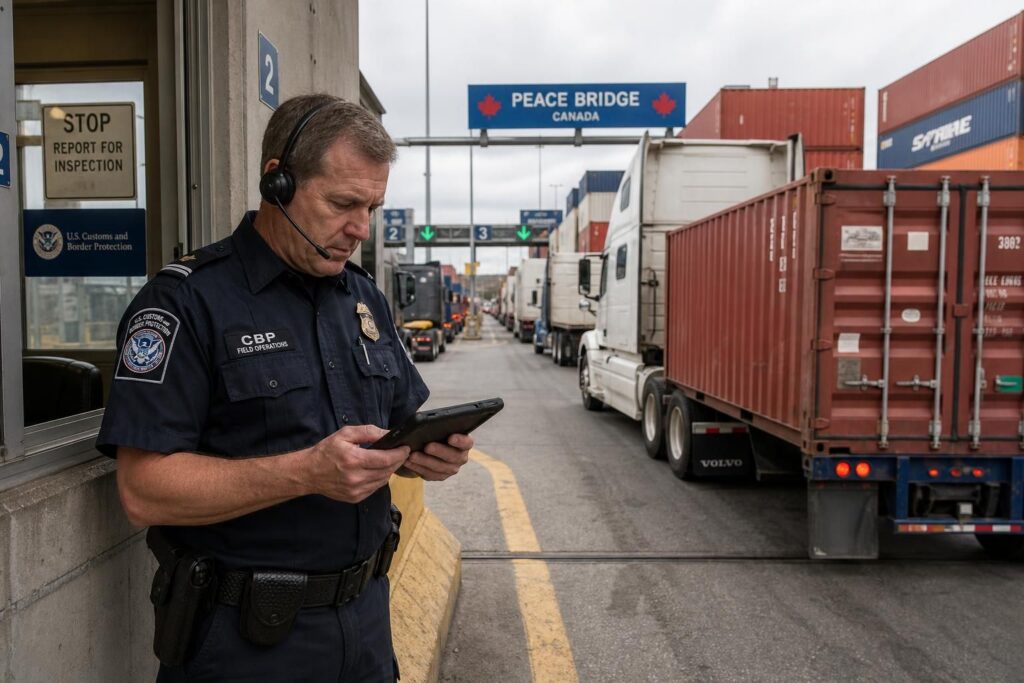
Trend #5 – Access to a Massive North American Consumer Base
Your Milton ONT cross-border ecommerce fulfillment strategy gets an immediate boost from the Milton-to-Buffalo corridor’s reach. Forty percent of North America’s population lives within a one-day drive from Buffalo, putting millions of customers within easy reach.
The St. Catharines to Buffalo corridor supports logistics for 370 million consumers, which massively expands the markets you can serve from a single fulfillment hub. US cities receive orders within two days, giving you a real edge that keeps customers satisfied and coming back.
- Direct access to I-90 and I-190, supporting fast distribution across the eastern seaboard
- Proximity to Toronto and the Greater Toronto Area for both Canadian and US markets
- Infrastructure built to handle high order volumes and seasonal spikes
- Access points across Erie County for retail, direct-to-consumer, and marketplace shipping
Your Milton ONT 3PL services operate at the intersection of two massive economies. That means you can scale without opening a second or third warehouse.
This geographic advantage turns your cross-border logistics from a challenge into your biggest competitive weapon in North America’s most dynamic markets.
Trend #6 – Omnichannel Fulfillment (DTC, Retail, Marketplace) Under One 3PL
Your business sells across multiple channels, and running each one separately drains your time and creates chaos. A single 3PL provider handling your direct-to-consumer sales, retail partnerships, and marketplace orders cuts out duplicate work and lowers your costs.
Companies using integrated omnichannel fulfillment through MILTON ONT cross-border ecommerce fulfillment services report 30 to 40 percent cost savings for operations managing up to 1,000 monthly orders. That frees up your team to focus on growth instead of logistics headaches.
- Real-time inventory sync across Shopify, Amazon, and other platforms
- Accurate stock levels everywhere your products sell
- Faster delivery options reaching 40% of North America within two days
Real-time inventory visibility across your channels prevents overselling and stockouts, the kind of mistakes that quietly damage customer trust. Your MILTON ONT 3PL services partner syncs your data instantly, so what you see is what you actually have.
This integrated approach gives you a competitive edge in the cross-border logistics space, changing how customers experience your brand from the moment they click “buy.”
Trend #7 – Real-Time API Integration and Inventory Visibility
Real-time API integration changes how your cross-border ecommerce fulfillment works between Milton ONT and Buffalo NY. This technology lets inventory and order data flow instantly across the border, cutting out delays that used to slow your business down.
How API Integration Speeds Up Your Operations
Your warehouse management systems connect directly to your sales channels, marketplaces, and customer platforms through these digital bridges. Better communication through API integration cuts down on errors and speeds up order processing at every step.
Automated warehouse management systems improve operational speed and delivery times, giving your team the tools to compete in today’s fast market. These systems also spot demand patterns instantly, so you can respond to market shifts before your competitors even notice them.
- Inventory data flows seamlessly across the international border
- Fewer manual errors in order processing
- Faster response to changing demand patterns
- No confusion about stock levels on either side of the border
Why Real-Time Tracking Matters to Your Customers
Your customers expect transparency, and 64% of customers now expect real-time tracking on their online purchases. Advanced tracking systems monitor every shipment as it moves, which helps your team manage inventory and keep operations running smoothly.
Optimized inventory visibility also prevents overstocking and stockouts, two costly mistakes that hit your bottom line directly. Transparent order tracking cuts down on support inquiries, too, and builds the kind of trust that turns first-time buyers into loyal repeat customers.
Milton ONT 3PL services now build these APIs directly into their operations, so you can focus on growing sales instead of managing logistics headaches. This shift toward real-time visibility marks a real change in how successful companies handle cross-border ecommerce fulfillment.
The next trend shows how reverse logistics and returns processing have become just as streamlined for your operation.
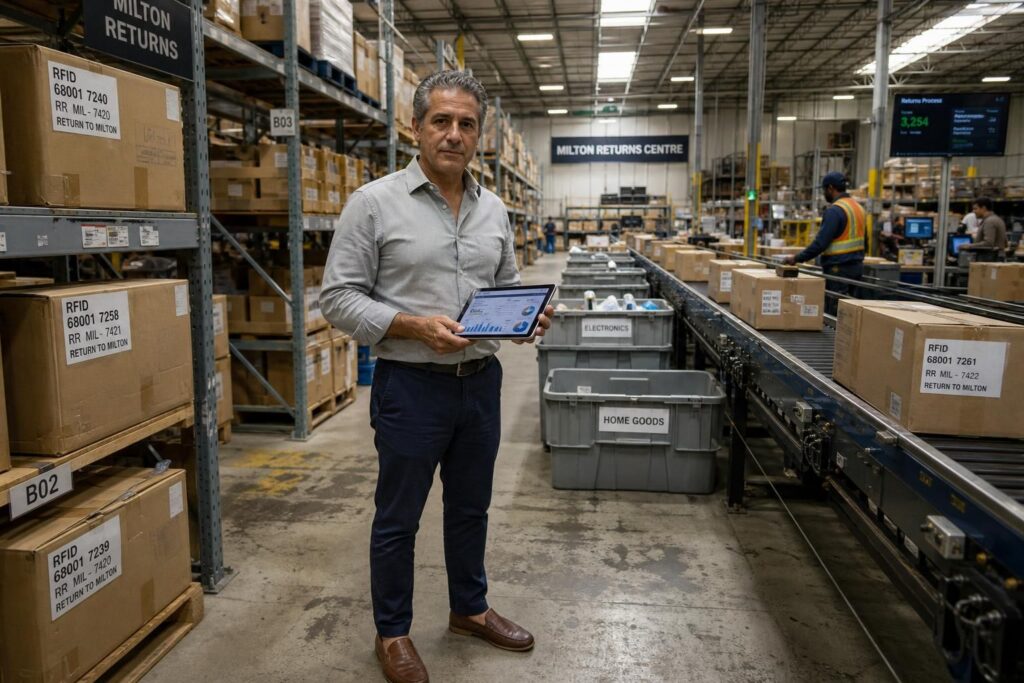
Trend #8 – Streamlined Reverse Logistics and Faster Returns
Your cross-border ecommerce fulfillment strategy falls short without a solid returns process. Streamlined reverse logistics cuts your return cycles dramatically, which improves customer satisfaction and encourages repeat purchases.
Here’s why that matters so much right now. The average US ecommerce return rate climbed to roughly 19.3% of online sales heading into 2026, up from 17.6% in 2024, according to National Retail Federation data. Processing a single return costs retailers an estimated $20 to $30 per item, so a slow or messy returns process quietly drains your profits.
RFID tags and advanced software track returned items in real time, so your team always knows exactly where each package sits in the return pipeline. What used to be a costly headache becomes a competitive advantage, since you can reclaim value from returned goods through refurbishing and redistribution.
- Clear return policies that create a risk-free shopping experience
- Faster processing that cuts cycle times substantially
- Better inventory visibility across your whole network
- Sustainable practices, like recycling returned items, that strengthen your brand
Clear return policies paired with seamless technology build the kind of confidence that drives loyalty. A positive returns experience even turns potential detractors into advocates, since customers appreciate a hassle-free process that respects their time.
This efficiency hits your bottom line directly. You spend less on logistics while building stronger relationships with your customers.
Your Milton ONT 3PL services partner should offer reverse logistics capabilities that integrate seamlessly with your fulfillment operations. That way, nothing falls through the cracks between Buffalo NY and your home market.
Why MILTON Area Brands Choose WNYFTZ for MILTON ONT Ecommerce Fulfillment?
MILTON ONT Ecommerce Fulfillment and 3PL services in 2026 give your business a real edge through proven cross-border logistics expertise. WNYFTZ partners with MILTON ONT brands to deliver cross-border ecommerce fulfillment solutions that save you money, speed up your shipping, and simplify your operations across the Canada-US border.
Call 716-823-2142 For a Quote
Your business deserves a partner that understands cross-border logistics between MILTON ONT and Buffalo NY. The expert team at WNYFTZ handles over 4.5 million deliveries annually, proof they can manage your orders at scale.
Call 716-823-2142 for a customized quote on ecommerce fulfillment and 3PL services built around your needs. The direct line connects you to specialists who focus on storage options, order processing rates, and shipping solutions, not generic pricing.
- Businesses processing around 1,000 orders monthly save 30 to 40 percent on fulfillment costs
- Real-time delivery tracking, which 88 percent of online shoppers consider critical to their purchase decision
- Personalized service built around your specific requirements, not a one-size-fits-all approach
- Two regional facilities that cut delivery times and optimize your fulfillment performance
The WNYFTZ team listens to your goals, studies your current operations, and builds a solution that actually works for your business.
Contact the WNYFTZ team today to see how MILTON ONT 3PL services can transform your fulfillment strategy. Reach out at 716-823-2142 to discuss your needs and get a quote built around your operation.
People also ask:
1. What is cross border ecommerce fulfillment between Milton, ONT, and Buffalo, NY?
It means moving online orders across the Canada-U.S. border between these two cities, handling storage, packing, and shipping to customers on both sides. The Buffalo-Fort Erie crossing is one of the busiest commercial gateways on the northern border, making it a natural route for your shipments. You get to tap into both Canadian and American markets without setting up two separate operations.
2. Why do businesses in Milton, ONT, use 3PL services for 2026?
You can skip the headache of managing warehouses, customs paperwork, and carrier contracts by working with a 3PL partner who already has systems in place. Many 3PLs now use automated customs filing through the ACE system, which cuts clearance delays from days to hours. As your order volume grows, your 3PL scales with you without forcing you to hire more staff or lease more space.
3. How does cross border logistics work between Milton, ONT, and Buffalo, NY?
Your goods move through a customs checkpoint where declarations are filed electronically, then carriers truck them to the final destination. Most shipments using Pre-Arrival Review System (PARS) get cleared within 30 minutes if the paperwork is accurate. Your logistics partner tracks each step so you know exactly where your freight is and when it will arrive.
4. What trends are shaping Milton, ONT, cross border ecommerce fulfillment in 2026?
Real-time tracking tools, AI-powered customs documentation, and expanded 3PL warehouse networks are making cross-border shipping faster and more predictable. U.S. online shoppers now expect delivery within 2-3 days even for cross-border orders, so providers are investing heavily in technology to meet that bar. You also see more retailers using bonded warehouses to defer duties until goods actually sell, which improves cash flow.
