

Cross Border Ecommerce Fulfillment Between WOODSTOCK ONT And Buffalo NY – Top 8 Trends
Cross Border Ecommerce Fulfillment Between WOODSTOCK ONT And Buffalo NY – The Top 8 Trends – Call 716-823-2142
You run an online shop from Woodstock, Ontario, and your US orders take too long and cost too much to ship. You’ve also heard the US duty-free rules changed, and you aren’t sure what you owe or what you have to file. If you’re comparing WOODSTOCK ONT Ecommerce Fulfillment & 3PL Services, this guide is for you.
Here’s the short answer. Keep your stock at a 3PL warehouse in Buffalo, New York, and the border crossing happens once, on a bulk shipment, so each US order ships as a regular US delivery. The $800 duty-free rule ended on August 29, 2025, so no shipment into the US skips customs anymore. That makes a Buffalo partner who handles customs and helps you time duty payments more useful than ever.
Below, you’ll see what changed, what you now owe and file, and the 8 trends that matter most for Woodstock sellers. You’ll also get a simple cost worksheet and a list of questions to ask when you call 716-823-2142 for a quote.
Key Takeaways
- The US suspended the $800 duty-free rule on August 29, 2025. Every shipment from Canada now needs a customs entry, a 10-digit tariff code, and country-of-origin papers.
- If you ship straight to US buyers or to a fulfillment center, you have to act as the US importer of record. You also have to keep your records for 5 years.
- Nearly all Canadian-origin products still enter the US duty-free under CUSMA, so good origin papers can save you real money.
- A Foreign Trade Zone in Buffalo lets you put off paying duties until goods leave the zone. It also lets you file customs entries in weekly batches instead of one for every parcel.
- One industry guide warns that duties paid on goods that come back as returns can’t be reclaimed. That makes it more important to handle returns on the US side.
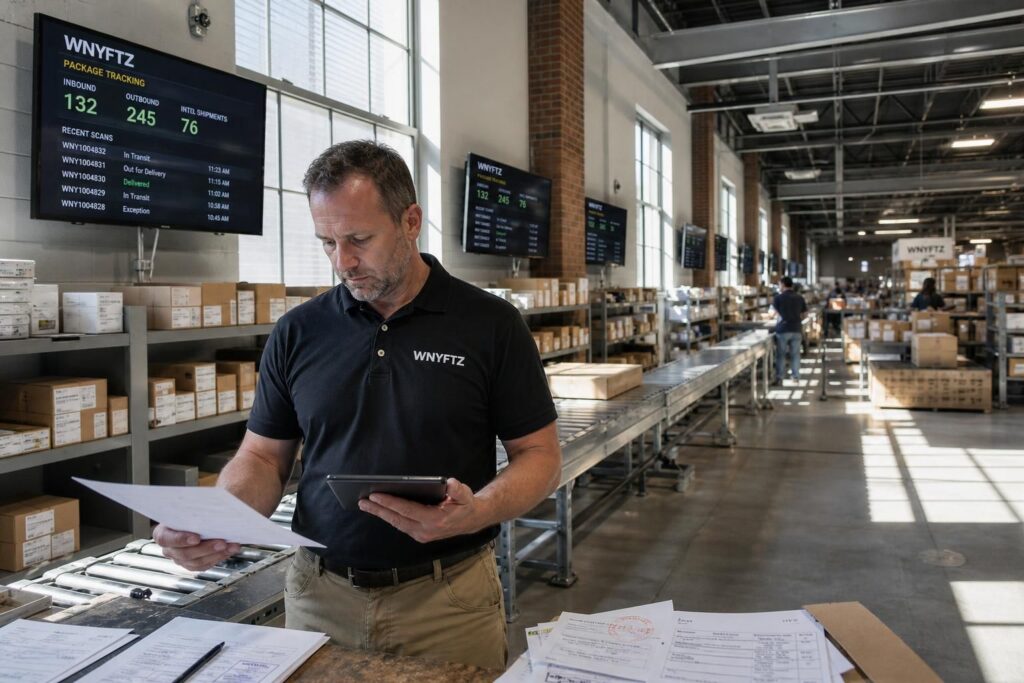
Why the Woodstock-to-Buffalo Corridor Works for Cross-Border Ecommerce Fulfillment
Woodstock sits in southwestern Ontario, a highway trip east to the Niagara border crossings. It’s a regional run, not a long haul across the country. The Peace Bridge is the crossing that connects directly to Buffalo, New York.
Before you sign up, ask your 3PL or carrier for the usual route from your door and which crossing they use. Also ask for the typical drive time, not counting border waits, since those change day to day.
The Peace Bridge handles over one million trucks a year, so it’s built for steady freight. Buffalo is also within a one-day drive of about 40% of the North American population, using I-90 and I-190.
That location matters for speed. A parcel sent from Canada to a US customer can take up to 20 days. With stock already in Buffalo, your customer’s order never has to cross the border at all.
Most brands don’t start with a US warehouse. Many begin by shipping parcels across the border, then add local fulfillment in the US as their order volume grows.
WNYFTZ offers cross border ecommerce fulfillment, Amazon FBA prep, customs clearing, and FTZ duty management. If you’re weighing cross-border ecommerce fulfillment between Woodstock, ON and Buffalo, NY, that mix of services is the main thing to compare.
What Changed in 2025: The End of the $800 Duty-Free Rule and What Woodstock Sellers Must Do Now
For years, a US buyer could get a small order from Canada without paying duty, as long as it was worth $800 USD or less. That door is now closed. The US suspended this “de minimis” exemption for all countries as of August 29, 2025.
In practice, every shipment from Canada into the US now needs full customs papers, a 10-digit tariff code, and entry processing. You also have to pay any applicable duties and fees. “Applicable” is the key word, because many Canadian-made goods still owe zero duty under CUSMA.
Here’s a checklist of what applies to you now. It separates what changed in 2025 from the importer rules that were already in place.
| Requirement | What Applies Now | New or Ongoing? |
|---|---|---|
| Duty-free limit | The $800 exemption is suspended for all countries | New since August 29, 2025 |
| Customs entry | Every shipment is entered with full customs papers | New for low-value orders |
| Tariff codes | A 10-digit HTS code for each product | Now needed on every shipment |
| Origin papers | Accurate country-of-origin documents | Now needed on every shipment |
| Duties and fees | Pay applicable duties based on product origin | New for orders that used to qualify as duty-free |
| Importer of record | You act as importer of record when shipping to consumers or fulfillment centers | Ongoing rule that now touches every order |
| Filing system | Importer details submitted through ACE, the US customs system | Ongoing importer duty |
| Records | Keep importer records for 5 years | Ongoing importer duty |
| Canadian setup | Business number with an export or import/export account | Ongoing exporter duty |
| Language and currency | All papers in English, all prices converted to USD | Ongoing rule |
The importer-of-record rule catches many sellers off guard. When you ship straight to US consumers or to a fulfillment center, US customs expects you, the Canadian exporter, to be the importer of record. A broker or 3PL can file for you, but the responsibility for the entry, duties, and records stays with you.
You may also see a second number. The Government of Canada guide lists $2,500 USD as the formal entry threshold. So the type of entry can depend on a shipment’s value, but the bigger change is the same either way: no shipment gets a free pass through customs anymore.
The good news is that you don’t have to repeat all of this on every parcel. A Buffalo 3PL lets you handle customs once, on a bulk shipment, instead of hundreds of times.
Trend #1: Faster Next-Day and Two-Day Delivery to US Customers
Speed still wins sales. In Canada, 60% of shoppers consider shipping times when they choose an online retailer. US buyers comparing your shop to a local seller are likely to think the same way.
Here’s how the main ways of shipping compare. The numbers come from different sources, so treat them as rough guides, not promises.
| How You Ship | Reported Delivery Time | Customs Work |
|---|---|---|
| Parcels mailed from Ontario to US buyers | Can take up to 20 days (upper end) | An entry for every shipment |
| Stock kept at a Buffalo 3PL | US domestic shipping; one Buffalo provider, Farrow, lists 2 to 3 days across the continental US | Handled on bulk shipments into the warehouse |
| Canadian domestic parcels, for comparison | About 2 business days | None |
The big change is where the waiting happens. With stock in Buffalo, the border crossing happens once, on your bulk shipment, before any customer places an order. Your buyer’s package then travels like any other US domestic order.
Delivery times still depend on the warehouse, the carrier, and the service level you pick. So ask WNYFTZ for delivery times by destination ZIP code, which carriers they use, and their daily order cutoff time.
Want to see what this would look like for your products? Call 716-823-2142 and ask for delivery times to your top US cities.
Trend #2: Lower Customs Costs With Bonded Storage and Duty Deferral in a Foreign Trade Zone
The end of the $800 rule can raise your landed costs, because applicable duties now have to be paid. It also adds paperwork and admin time. A Foreign Trade Zone is one of the best ways to soften both.
When your stock sits in the WNYFTZ Foreign Trade Zone, you don’t pay duties when the goods arrive. You pay only when products actually leave the zone. That keeps cash in your business longer, especially for slow-moving items.
There are other savings too. The National Association of Foreign Trade Zones confirms that qualifying FTZ inventory is generally exempt from state and local inventory taxes.
Filing customs entries weekly, instead of for every shipment, cuts how many Merchandise Processing Fees you pay. Goods that are re-exported or destroyed inside the zone owe no duties at all.
Now add CUSMA to the picture. Nearly all Canadian-origin products enter the US duty-free under the trade agreement. If your goods are made in Canada and your origin papers prove it, the duty you owe may be zero, even though you still have to file the entry.
That changes how much the FTZ is worth to you. Putting off a duty of zero saves nothing, so the deferral matters most for products that don’t qualify as Canadian-origin. Weekly entries and faster delivery can still help, even on duty-free goods.
For example, say you sell candles made in Woodstock and phone cases made overseas. The candles may go in duty-free under CUSMA. The FTZ then helps you put off paying duty on the phone cases until each one sells.
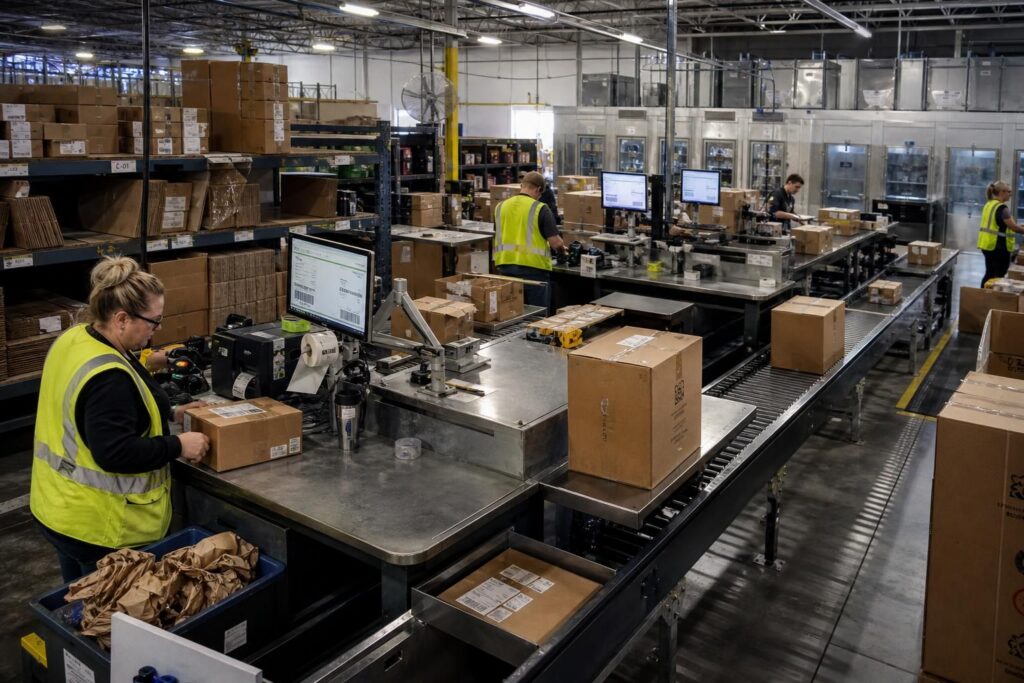
Trend #3: Lower Fulfillment Costs With Cross-Docking
Not every product needs to sit on a shelf. With cross-docking, goods come off an inbound truck, get sorted, and go right onto an outbound truck with little or no storage time.
That skips a step, so you can pay less for storage and get orders moving sooner. It works well for wholesale orders headed to stores, seasonal items, and anything that needs to move fast.
Less time in storage also means less risk of damage and fewer products going out of date. For example, picture one truckload from Woodstock crossing into Buffalo, then splitting into several store deliveries the same week.
Shipment consolidation is part of the same idea. Grouping packages before they go out helps keep warehouse costs down.
Ask your 3PL which of your products are good fits for cross-docking infrastructure and which should stay in stock. Many sellers may find a mix of both works best.
Trend #4: Simpler Customs Clearance and Border Compliance
Good paperwork is the backbone of cross-border fulfillment. Every shipment that crosses the Canada-US border needs proper customs documents.
Customs mistakes can lead to holds at U.S. Customs and Border Protection checkpoints, delays, and fines. Here’s a simple step-by-step plan for getting set up.
- Get your business number set up. Make sure your Canadian business number (BN) has an export or import/export account.
- Find the right tariff code. Each product needs a 10-digit HTS code.
- Gather origin papers. Collect accurate country-of-origin documents for every product. Canadian-origin goods are often duty-free under CUSMA, so this step can save you money.
- Use English and US dollars. All information must be in English, and all prices must be converted to USD.
- Know who the importer of record is. When you ship directly to consumers or fulfillment centers, that’s you.
- File the entry. Importer details are submitted through ACE, the US customs system. Your 3PL or customs broker can do the filing, but you still own the result.
- Keep your records. Importers of record must keep records for 5 years.
Fees add up when you file a lot of entries. Each customs entry can carry a Merchandise Processing Fee, and the maximum fee per entry changes from time to time. Filing weekly entries through an FTZ cuts the number of fees you pay.
WNYFTZ offers support with customs compliance to help prevent delays and fines at the border. A partner who knows both sides of the border can spot a wrong code or a missing origin document before it turns into a hold.
Trend #5: Reaching a Huge US Customer Base Without Warehouses in Every State
You don’t need a warehouse in every state to sell across the US. One stock pool in Buffalo can serve US buyers through regular domestic carriers. The smart part is deciding what to move first.
Here’s a simple way to phase it in:
- Pick your steady sellers. Start with the few products that sell to US buyers every week.
- Keep slow sellers in Ontario. Rare or test items can keep shipping as single parcels for now.
- Plan your restocks. Each refill is a bulk shipment through customs, so decide how often you’ll send one and how much stock to keep on hand.
- Compare both models. Use your quote and the cost worksheet near the end of this article to see which way costs less per order.
- Move more over as you grow. As US sales climb, shift more products to Buffalo.
This step-by-step approach matches how many brands grow. Most shift to local fulfillment as order volume in a market grows.
Selling in Canada too? Some Buffalo providers, such as Farrow, also run Canadian warehouses in the Toronto area. Ask any provider how they support both your Canadian and US customers so you aren’t juggling two separate systems.
Trend #6: Your Website, Retail, and Amazon Orders Shipped by One 3PL
If you sell on Shopify, Amazon, and to stores, you may be using a different setup for each one. Running all three from one Buffalo 3PL means one pile of stock, one set of customs entries, and one team to call.
Here’s what a single 3PL can handle for you:
- Website orders: Orders from your own store ship straight to US customers, with direct links to platforms like Shopify.
- Retail and wholesale orders: Bigger shipments go out to stores, including LTL shipments.
- Amazon and marketplace orders: Orders ship from the same stock, and Amazon FBA prep is available when you send goods into Amazon’s network.
- Pick and pack: Barcode scanning helps keep orders accurate.
- Special storage: Cold storage is available for temperature-sensitive products.
- Extra services: WNYFTZ also offers public warehousing, vendor-managed inventory, and freight brokering.
One stock pool also makes it easier to handle sudden spikes. If Amazon sales jump one week, you’re drawing from the same shelves instead of rushing a new shipment across the border.
Call 716-823-2142 for a quote on fulfillment across all your sales channels.
Trend #7: Real-Time Inventory Tracking Through API Connections
When your stock is in another country, you need to see it clearly. An API connection links the warehouse system to your online store and marketplace accounts, so stock levels update on their own.
When a customer orders on your website, your Amazon count changes too. That helps you avoid selling items you don’t actually have.
Real-time tracking also saves your team time. It cuts down on typing stock numbers into spreadsheets by hand.
Low-stock alerts warn you before you run out. That matters more for a cross-border seller, because restocking means another bulk shipment through customs.
Customers like it too. Automated text and email updates let them follow their order without calling you.
When you talk to a 3PL, ask which platforms they connect to, how often stock counts sync, and whether you can see FTZ inventory and customs status in the same dashboard.
Trend #8: Faster, Cheaper Returns Handled on the US Side
Returns have become more expensive since the $800 rule ended. One industry guide warns that duties paid on goods that are later returned can’t be reclaimed. Ask your broker whether any refund options apply to your products, but plan as if that money is gone.
Think about what that means if you ship single parcels from Ontario. You pay any duty on the way in, the customer sends the item back, and you may not get that money back. Then you face more shipping and paperwork to bring the item back into Canada.
Handling returns in Buffalo changes this. Returned items come back to a US warehouse, where staff can check them, sort them, and restock them for the next US order.
That means faster refunds for your customers and quicker restocking for you. It also keeps returned goods from crossing the border again and again.
For low-value items, a returnless refund can make sense. The customer keeps the item, gets a refund, and you skip return shipping that might cost more than the product.
Ask your 3PL how they inspect returns, how fast items go back into stock, and how returns are handled for goods stored in the FTZ.
Why Woodstock-Area Brands Choose WNYFTZ for Cross-Border Fulfillment
Since August 2025, the right Buffalo partner has to do more than store boxes. They have to help you with customs, importer-of-record duties, and when you pay your duties. Here’s what WNYFTZ brings:
- A licensed Foreign Trade Zone: You can put off paying duties until goods leave and file customs entries weekly.
- Customs clearing and compliance help: Support that helps you avoid delays and fines at the border.
- US-Canada border know-how: Staff who focus on US-Canada border operations.
- Every order size: Staff who handle everything from full truckloads to single parcels.
- Amazon FBA prep: Your marketplace stock gets ready in the same building.
- A secure facility: Multiple truck docks and an alarmed sprinkler system.
- A US presence: Business mailbox services for a US address.
Is a Buffalo 3PL a Good Fit for You?
A Buffalo 3PL usually makes sense once your US orders are steady. That matches what many brands do: start with cross-border parcels, then shift to local fulfillment as volume grows.
It’s probably a good fit if you get US orders every week, your customers complain about slow delivery, or customs paperwork on single parcels is eating up your time. It may be too early if your US sales are still rare or you’re only testing the market.
The best way to know for sure is to compare your real costs. There’s no magic order count that works for every seller.
Compare Your Costs Side by Side
Fill in this worksheet with your own numbers and the figures from your quote. Then compare the cost per US order for each way of shipping.
| Shipping Parcels From Ontario | Stocking Inventory in Buffalo |
|---|---|
| Cross-border postage per parcel | Bulk freight from Woodstock to Buffalo |
| Customs clearance or brokerage fees per parcel | Brokerage fees per bulk or weekly entry |
| Applicable duties on each order | Applicable duties, paid when goods leave the FTZ |
| Returns shipped back to Canada | Returns handled and restocked in Buffalo |
| Your team’s time on parcel paperwork | Receiving, storage, and pick-and-pack fees |
| Not applicable | US domestic postage and any FTZ fees |
Keep CUSMA in mind as you fill this in. If most of your products are Canadian-origin and owe zero duty, the FTZ deferral saves you less. Faster delivery, fewer entries, and cheaper returns may still tip the math toward Buffalo.
Call 716-823-2142 for a Quote
You’ll get a faster, more accurate quote if you have a few details ready. Here’s what to gather before you call:
- Product types: What you sell, plus sizes, weights, and any special storage needs.
- HTS codes: Your 10-digit codes, if you know them.
- Where your products are made: This helps show which items may qualify for CUSMA duty-free status.
- Monthly order volume: How many US orders you ship now and how many you expect.
- Sales channels: Shopify, Amazon, wholesale, or a mix.
Then ask these questions on the call:
- Are there minimum monthly charges?
- What is my all-in cost per order at my volume?
- Who files my customs entries, and do I stay the importer of record?
- What CUSMA origin papers do you need from me?
- Can my goods use weekly entries through the FTZ?
- What FTZ fees apply on top of storage?
- How do you handle returns, and how fast do items go back into stock?
- What are your delivery times to my top US ZIP codes?
People also search for:
1. What are WOODSTOCK ONT 3PL services in 2026, and why do online sellers use them?
A 3PL company stores, packs, and ships your orders for you. Canadian sellers use Woodstock ONT 3PL services to reach U.S. buyers faster through a Buffalo warehouse, often cutting delivery times by 2 to 3 days.
2. How does WOODSTOCK ONT cross border logistics work with Buffalo NY?
Your goods travel about 90 miles from Woodstock to cross at the Peace Bridge or Lewiston-Queenston Bridge, a customs broker files the paperwork, and your freight moves to a Buffalo warehouse for U.S. delivery.
3. What trends are shaping WOODSTOCK ONT cross border ecommerce fulfillment?
Buyers expect 2-day delivery, real-time tracking, and upfront landed costs at checkout. Many sellers ship bulk to Buffalo then send single parcels from there to cut costs and speed things up. The U.S. de minimis threshold is $800, so planning your customs strategy helps you avoid surprise duties.
4. How can I start cross border fulfillment between Woodstock and Buffalo?
Call 716-823-2142 to discuss your products, order volume, and shipping goals.
