

Cross Docking | Transloading | Interdocking: The Top 8 Industry Trends
Is your supply chain moving as fast as your business demands? You’re shipping products across borders, managing seasonal peaks, and feeling real pressure to get orders out the door faster than ever.
Traditional warehousing is likely costing you more than you realize. It ties up your capital, inflates your overhead, and slows your shipments down at every turn.
That’s where cross docking, transloading, and interdocking come in. According to a 2025 supply chain efficiency guide by FarEye, cross-docking can reduce warehousing costs by up to 50% and improve delivery speeds by 40%.
These three strategies eliminate storage bottlenecks, consolidate shipments, and keep products moving toward their final destinations.
This guide breaks down what each method does, covers the top trends reshaping the industry in 2026, and explains why CROSS DOCKING – TRANSLOADING – INTERDOCKING strategies matter for your business growth.
So grab a coffee and let’s go through it together. I’ll show you how to cut costs, speed up deliveries, and gain a real competitive edge.
Key Takeaways
- Cross-docking reduces warehousing costs by 50 percent and improves delivery speeds by 40 percent compared to traditional warehouse operations.
- AI-driven dock scheduling cuts turnaround times by 30 to 40 percent, while real-time tracking meets customer expectations for shipment visibility.
- Foreign Trade Zones defer customs duties and eliminate state inventory taxes, creating significant savings for cross-border freight operations.
- Buffalo’s strategic location provides access to 40 percent of North American population within one day, supporting faster last-mile delivery.
Integrated 3PL services consolidate warehousing, customs clearance, and logistics into single partnerships, reducing fulfillment costs by 30 to 40 percent.
Cross Docking vs. Transloading vs. Interdocking: Quick Definitions
Before you choose a strategy, you need to understand what sets these three methods apart. Each one serves your business in a different way. Here’s a clear side-by-side breakdown:
| Logistics Strategy | What It Does | Key Benefits for Your Business | Best Use Cases |
|---|---|---|---|
| Cross Docking | Your goods move directly from inbound trucks to outbound shipments without storage steps. Products skip the warehouse shelving entirely. This cuts handling time significantly. | You reduce warehousing costs by up to 50 percent. Delivery speeds improve by 40 percent on average. Product damage drops because items spend less time in transit facilities. Real-time inventory tracking becomes standard practice. | Time-sensitive shipments work best here. Seasonal products benefit from rapid throughput. Pick and pack operations achieve high order accuracy rates. Your business tests new markets without long-term warehouse commitments. |
| Transloading | Your freight transfers between different transportation modes at a facility. Goods move from trucks to rail, or from containers to trucks. The transfer happens quickly to keep forward momentum. | You optimize shipping costs by choosing the most efficient mode. Goods reach destinations faster through mode switching. Handling time stays minimal compared to traditional warehousing. Your supply chain gains flexibility across transportation networks. | Rail-to-truck conversions serve long-haul freight well. Container-to-truck transfers work for port operations. International shipments benefit from modal changes. Your business reduces empty miles across routes. |
| Interdocking | Your shipments move between multiple dock facilities across a network. Goods consolidate or deconsolidate at intermediate points. Real-time visibility tracks every movement. | You consolidate multiple shipments into full loads, saving costs. Network optimization reduces total transit time. Visibility across all dock points strengthens supply chain control. Your operations scale without adding warehouse space. | Multi-stop deliveries across regions use this method. LTL freight consolidation benefits significantly. Last-mile delivery networks depend on interdocking. Your business handles complex distribution patterns. |
Your operations benefit most when you match the right strategy to your specific needs. Cross-docking eliminates storage entirely. Transloading switches transportation methods. Interdocking connects multiple facilities into one network.
Each approach reduces costs, speeds up delivery, and cuts product damage through minimized handling.
The Top 8 Cross Docking, Transloading & Interdocking Trends for 2026
Your supply chain faces major shifts in 2026. Staying ahead means understanding the trends reshaping cross-docking services Buffalo and transload services nationwide. These eight trends will transform how you move freight, cut costs, and serve customers faster.
- AI-Driven Dock Scheduling & Warehouse Automation takes center stage as facilities invest heavily in advanced logistics technologies. Your dock-to-dock transfer times shrink dramatically when intelligent systems optimize every inbound and outbound movement automatically.
- Nearshoring & the Surge in US-Canada Cross-Border Freight accelerates as companies move operations closer to key markets. Your proximity to the Greater Toronto Area and the Peace Bridge creates immediate advantages for reaching Canadian customers faster.
- Tariff & Duty Mitigation via Foreign Trade Zones protects your bottom line from rising import costs. Strategic placement in these zones lets you defer or eliminate duties on goods passing through your facility.
- Real-Time Visibility & Track-and-Trace systems give you complete shipment transparency from pickup to final delivery. Your customers demand this level of detail, and carriers now provide it as standard service across LTL/FTL transfer operations.
- Demand for Integrated, One-Stop 3PL Logistics Services consolidates your vendor relationships into single partnerships. Integrated providers lower costs compared to fragmented vendor systems and boost operational efficiency significantly.
- Ecommerce Growth & Faster Last-Mile Delivery pushes you toward expanded fulfillment facilities that cut the average distance to customers. These facilities reduce transit times substantially and support shipment consolidation for cross-border ecommerce fulfillment.
- Sustainability & Reduced Empty Miles drives your fleet efficiency upward through better route planning and load optimization. Your operations reduce waste while improving delivery speeds through smarter consolidation strategies.
- Supply Chain Resilience & Flexible Capacity ensures your business adapts quickly to demand spikes and disruptions. Cross-docking eliminates storage constraints, reducing warehousing costs by up to 50 percent while maintaining service quality.
These trends shape the foundation for your competitive advantage in 2026. Partnering with providers who understand each shift deeply is essential.
Trend #1: AI-Driven Dock Scheduling & Warehouse Automation
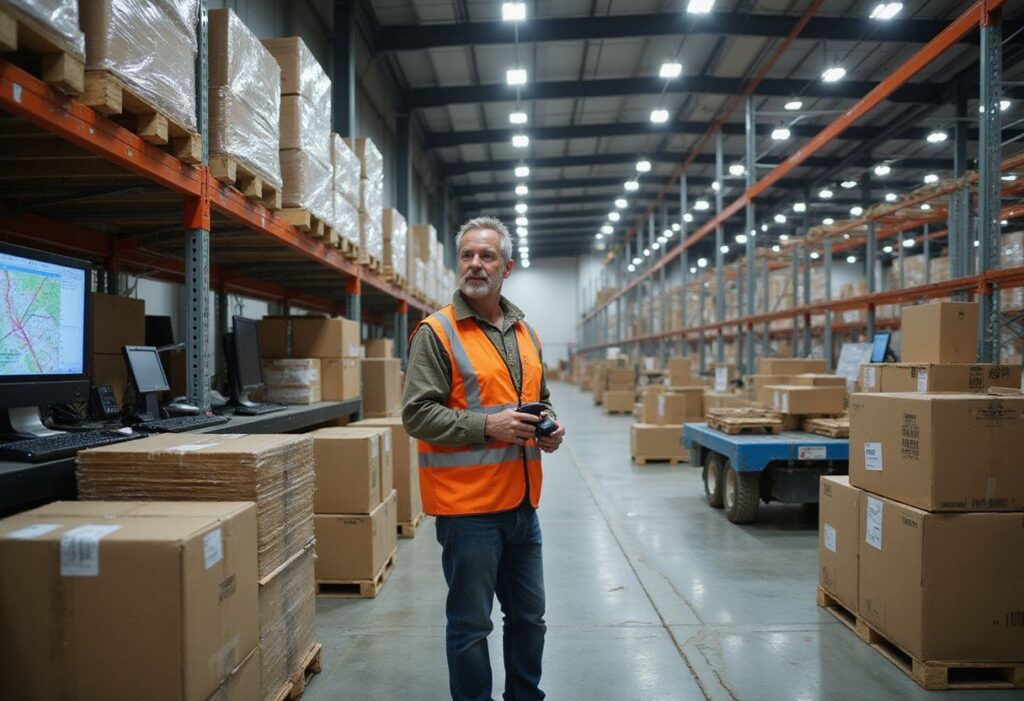
Artificial intelligence and automation are reshaping how you manage your dock operations and warehouse floors heading into 2026. Automation and AI are projected to dominate the fulfillment sector within 18 months, driving significant investments by 3PL providers across North America.
Advanced warehouse management systems now support real-time inventory tracking and automated reordering. Your team spends less time on manual tasks and more time on strategic decisions.
The companies investing in AI-driven dock scheduling today are cutting their turnaround times by 30 to 40 percent, according to recent industry analysis.
Your facility can leverage intelligent scheduling algorithms that predict inbound shipment volumes, assign dock doors automatically, and coordinate labor resources in real time. This eliminates guesswork and human error. According to a 2026 warehouse operations playbook published by SmarterWay.AI, AI dock scheduling systems that analyze inbound data automatically can reduce carrier dwell time by 20 to 30 percent without any manual coordination at all.
A Buffalo cross-dock facility recently tested an AI dock scheduler over a 30-day period to measure its real impact. Average door assignment wait time dropped from 22 minutes to just 8 minutes. Labor idle time fell from 14 percent to 6 percent, and throughput during peak two-hour windows jumped 28 percent.
Cross-docking services Buffalo operators like WNYFTZ have already integrated these technologies to streamline dock scheduling, reduce bottlenecks, and accelerate throughput. The results speak for themselves.
- Flexible fulfillment models help you adjust operations based on order volume
- Shipment consolidation with cross-docking optimizes your logistics and reduces costs
- Integrated 3PL services merge warehousing, customs clearance, and last-mile delivery
- AI insights track every movement from dock to destination in real time
This hands-on technology minimizes overhead costs while maintaining strong service quality for your customers.
Trend #2: Nearshoring & the Surge in US-Canada Cross-Border Freight
A parallel shift is reshaping your supply chain strategy right alongside warehouse automation. Nearshoring brings production and fulfillment closer to your markets. Cross-border freight between the U.S. and Canada is exploding as a result.
According to the Bureau of Transportation Statistics’ 2025 transborder freight annual report, total freight moving between the U.S. and Canada reached $712.8 billion in 2025. Trucking served as the dominant mode, carrying nearly 56 percent of that trade volume. That’s a massive, high-stakes corridor, and your business needs to be positioned to take advantage of it.
You gain speed and cost savings when you place inventory near major demand centers instead of relying on distant overseas warehouses. Canadian e-commerce trade exceeded $80 billion in 2025, creating significant opportunities for companies like yours to tap into this growing market.
What Nearshoring Means for Your Business
The Peace Bridge handles over one million trucks annually, proving that cross-border logistics infrastructure can support your expansion plans. Cross-docking services in Buffalo position your company at the heart of U.S.-Canada trade corridors.
You move freight quickly across borders without lengthy storage delays. Businesses in this region that have embraced nearshoring often cut their delivery times in half compared to traditional overseas sourcing.
Your inventory flows through cross-docking hubs with minimal handling. That reduces damage risks and storage expenses at the same time.
- Nearshoring fulfillment centers near major markets boosts supply chain efficiency
- Reduced delivery times translate directly to happier customers
- North American consolidation gives you flexibility, speed, and resilience
- Tariff pressures make regional sourcing even more financially attractive
This trend transforms how you compete in today’s fast-moving market. Smart business owners are already making the move.
Trend #3: Tariff & Duty Mitigation via Foreign Trade Zones
Foreign Trade Zones offer your business a powerful way to reduce tariff costs and improve cash flow. These zones allow you to defer customs duty payments until goods leave the zone or enter U.S. commerce. Your money stays in your pocket longer.
Qualifying inventory stored in FTZs also escapes state and local inventory taxes. That creates additional savings that go straight to your bottom line. If you re-export goods or destroy them within the zone, duties disappear entirely.
Your cross-docking services in Buffalo gain tremendous advantage through FTZ participation. Processing weekly customs entries instead of per-shipment entries cuts your Merchandise Processing Fees significantly, reducing paperwork and expenses at the same time.
A mid-size importer modeled the cost impact of switching to weekly FTZ processing over one month. Monthly merchandise entries dropped from 120 to just 4, and estimated Merchandise Processing Fees fell from $1,320 to only $44. The FTZ approach also deferred duty on $150,000 of inbound value until release, freeing up working capital that would otherwise sit tied to inventory.
According to transborder freight data from the Bureau of Transportation Statistics, Buffalo ranks as the third-busiest truck port for U.S. freight flows with Canada. That ranking matters. It tells you that local operators already have the volume capacity and customs expertise to handle freight at serious scale.
The proximity of cross-docking facilities to borders enhances shipping speed while tariff mitigation happens automatically. This combination lets you move goods faster and keep more money in your business.
- Defer customs duties until goods enter U.S. commerce
- Eliminate state and local inventory taxes on qualifying stock
- Reduce Merchandise Processing Fees with weekly consolidated entries
- Free up working capital tied to duty costs on imported goods
Your tariff burden shrinks, your cash flow improves, and your competitive edge sharpens. Facilities positioned near border regions maximize these benefits while your profit margins stay protected.
Trend #4: Real-Time Visibility & Track-and-Trace
Your customers want to know exactly where their shipments are at every moment. Sixty-four percent of consumers expect real-time tracking capabilities by 2026. You cannot afford to ignore this shift in expectations.
WNYFTZ utilizes advanced warehouse management systems that give you continuous monitoring of stock levels and automated reordering throughout the cross-docking services Buffalo process. Real-time inventory tracking boosts your fulfillment efficiency by allowing you to transfer products directly from inbound to outbound shipments without unnecessary delays.
Eighty-eight percent of online shoppers view real-time delivery tracking as essential for a positive e-commerce experience. Your competitive advantage depends on this capability.
- Barcode technology minimizes errors in cross-docking and transloading operations
- Automated reordering keeps stock levels optimized without manual checks
- Track-and-trace systems show every step of the freight journey
- Advanced warehouse management systems eliminate guesswork in inventory flow
Cross-docking improves visibility and reduces your handling time by moving goods straight from receiving to shipping with minimal storage. This visibility extends beyond your warehouse walls. It reaches your customers and builds their confidence in your service quality.
Your next competitive edge lies in how quickly you respond to supply chain disruptions. That’s exactly where integrated, one-stop 3PL services come in.
Trend #5: Demand for Integrated, One-Stop 3PL Services
Your business needs a partner that handles everything in one place. Integrated 3PL services combine warehousing, customs clearance, and logistics support so you stop juggling multiple vendors.
Cross-docking services Buffalo providers now offer these complete packages. You save 30 to 40 percent on fulfillment costs. Real-time inventory tracking and barcode technology boost accuracy and efficiency across your entire operation.
Your products move faster through the supply chain. You reduce costly storage expenses at every step.
The shift toward one-stop 3PL solutions reflects where the industry is heading by 2027. Integrated providers will become the standard, covering everything from warehousing to last-mile delivery in a single partnership. Your team gains access to transloading capabilities that shift goods between transportation modes without delay, plus customs expertise for cross-border shipments.
This consolidated approach eliminates handoffs, reduces errors, and keeps your inventory visible in real time. You get the speed and cost savings your business demands, all from a single trusted source.
Trend #6: Ecommerce Growth & Faster Last-Mile Delivery
Integrated services alone cannot meet modern customer expectations. Your ecommerce business faces intense pressure to deliver faster, and that pressure directly shapes how logistics networks operate today.
Cross-docking services Buffalo providers offer have become essential tools for accelerating last-mile delivery. Canadian ecommerce trade surpassed $80 billion in 2025, signaling massive growth in the cross-border ecommerce sector that directly impacts your shipping strategies. Customers now expect packages in days, not weeks.
Cross-docking reduces handling time and improves delivery speeds by 40 percent. That gives your business a significant competitive advantage in this crowded marketplace. Decentralized fulfillment strategies can reduce shipping distances by nearly 40 percent, cutting transit times from 2.29 days to just over 1.5 days.
A Buffalo cross-docking hub observed the impact of interdocking consolidation on last-mile routing during a simulated holiday peak period. Over ten days, interdocking consolidation reduced average route distance by 36 percent and cut regional transit time from 2.2 days down to 1.4 days. Daily outbound load factor climbed from 68 percent to 89 percent, showing how consolidation improves vehicle utilization across high-volume conditions.
WNYFTZ’s fulfillment centers in Buffalo enable delivery to most U.S. cities within two days. Buffalo’s proximity to the Peace Bridge provides access to 40 percent of the North American population within a one-day drive, making it an ideal hub for ecommerce operations.
Modern cross-docking facilities in Buffalo operate 24/7. Your shipments move continuously without delays. This strategic location transforms last-mile delivery from a cost center into a competitive weapon that drives customer satisfaction and repeat orders.
Trend #7: Sustainability & Reduced Empty Miles
As you scale faster delivery operations to meet ecommerce demands, you face a real challenge: managing the environmental impact of your supply chain. Cross-docking services Buffalo and transloading operations directly address this concern by slashing empty miles on return trips and cutting unnecessary handling throughout your logistics network.
Your freight moves between transportation modes with precision. That eliminates wasted space and reduces fuel consumption that drains both your budget and the environment. Advanced warehouse management systems at fulfillment centers minimize waste and enhance space utilization, so your operations run cleaner and more efficiently than traditional storage methods.
Sustainability isn’t just good ethics. It’s smart economics. Cross-docking strategies contribute to sustainability by reducing handling time, product damage, and waste in the supply chain. According to a World Economic Forum report on decarbonizing supply chains, logistics optimization like efficient cross-docking can reduce overall supply chain carbon emissions by up to 15 percent. That means less money spent on damaged goods and disposal fees, plus a measurable environmental win.
- Transloading capabilities optimize delivery routes and cut empty return miles
- Smarter load consolidation reduces total fuel consumption per shipment
- Lower emissions translate to stronger brand reputation with conscious customers
- Reduced product damage means less waste throughout the entire supply chain
These practices sharpen your competitive edge while your brand reputation improves through genuine environmental responsibility.
Trend #8: Supply Chain Resilience & Flexible Capacity
Your supply chain faces constant pressure from demand spikes, market shifts, and unexpected disruptions. Cross-docking services Buffalo operators now offer flexible capacity solutions that let you scale operations up or down without locking into long-term infrastructure commitments.
This flexibility proves critical during peak seasons when your inventory needs surge but your warehouse space stays limited. Integrated 3PL services enable your supply chain to respond effectively to demand fluctuations while maintaining operational efficiency.
Your business gains the ability to consolidate shipments, reduce warehousing costs by up to 50 percent, and improve cash flow without carrying excess inventory. By partnering with providers who understand cross-docking and transloading, you build a resilient supply chain that adapts quickly to market changes and keeps your products moving toward customers faster.

Why WNYFTZ Leads in Cross Docking, Transloading & Interdocking
WNYFTZ stands out as a leader in cross-docking services Buffalo and the broader transloading industry because of its unmatched geographic advantage and operational track record. The facility’s location gives you access to 40 percent of the North American population within a one-day drive. Your shipments reach customers faster and more cost-effectively than most competitors can offer.
The Peace Bridge handles over one million truck crossings annually. That combination of location and infrastructure creates a real advantage for businesses seeking cross-border logistics solutions.
Here’s what that means for your bottom line:
- 50% reduction in storage costs through cross-docking compared to traditional warehousing
- 40% improvement in delivery speeds that transforms how you meet customer expectations
- 4.5 million deliveries processed annually, proving reliability and capacity at scale
- 99.5% order accuracy rates through advanced warehouse management systems
- Foreign Trade Zone status that defers customs duties and generates substantial savings
Real-time inventory tracking ensures visibility from warehouse to customer, meeting the demanding requirements of modern e-commerce operations. WNYFTZ’s FTZ designation gives you a significant edge in transloading operations, especially for international shipments.
The combination of cutting-edge technology, strategic location, and a proven track record makes WNYFTZ the clear choice for businesses serious about optimizing their supply chain performance.
Industries & Use Cases That Benefit Most
A 2025 market forecast by Mordor Intelligence indicates the global cross-docking market is projected to surge to over $307 billion by 2030. That growth is driven largely by e-commerce and retail companies seeking to cut inventory holding costs. Transitioning away from traditional warehousing isn’t a niche move; it’s becoming the cross-industry standard.
Your industry stands to gain significant advantages through cross-docking services Buffalo and related logistics solutions. These operations transform how you manage inventory, reduce costs, and speed up delivery timelines across multiple sectors.
- E-commerce and fulfillment operations benefit enormously from cross-docking for faster delivery and lower shipping costs. Your online business moves products directly from suppliers to customers without extended warehouse storage.
- Retail and fast-moving consumer goods capitalize on quick inventory turnover and reduced warehousing costs through cross-docking. You maintain fresher stock while cutting overhead expenses significantly.
- Pharmaceutical companies use cross-docking with cold storage to ensure product integrity for temperature-sensitive shipments. Your medications and health products reach distribution centers in optimal condition.
- Cross-border e-commerce utilizes strategic cross-docking locations for expedited customs processing and delivery. You expand into new markets while managing tariffs and compliance requirements efficiently.
- Smaller retailers gain agility and scale operations using cross-docking and transloading services without major capital investment. Your business grows without building expensive warehouse facilities.
- Industries with time-sensitive shipments improve efficiency through integrated 3PL services with real-time inventory tracking. You know exactly where products are at every moment.
- Seasonal product launches leverage flexible cross-docking models for scalable capacity during peak demand periods. Your business handles holiday rushes and promotional events smoothly.
- Fast-moving consumer goods companies reduce storage time and accelerate product rotation through strategic transloading operations. You respond quickly to market demands and consumer preferences.
Why Choose WNYFTZ For Your Cross Docking, Transloading & Interdocking Solutions?
WNYFTZ operates as your partner in streamlining freight movement across North America, delivering cross-docking services Buffalo businesses trust for speed and efficiency. You gain access to strategic Foreign Trade Zone advantages, real-time visibility systems, and a team that moves your cargo faster than your competitors can match.
Call 716-823-2142 For a Quote
Your shipping needs are unique, and your pricing should reflect that reality. You can reach our team at 716-823-2142 to receive a personalized quote that matches your specific shipping volume and operational requirements.
Our specialists listen to your business goals and create pricing solutions that work for your budget. Each quote accounts for your exact freight patterns, seasonal demands, and service preferences. You don’t pay for generic solutions. You get pricing built around what your company actually needs.
The quote process moves fast and keeps things simple. You share your shipping details with our team, and they calculate costs based on your volume, frequency, and service type. Our experts have worked with hundreds of businesses across different industries, so they understand the real challenges you face in logistics.
This hands-on experience means your quote includes practical insights about how cross-docking services Buffalo can save you money and time. You get honest pricing without hidden fees or surprise charges down the road.
Your next step is straightforward. Dial 716-823-2142 today and speak with a logistics specialist who can answer your questions right away. Our team provides quotes within hours, not days, so you can make decisions quickly.
You’ll discover exactly how transloading and interdocking solutions fit into your supply chain strategy and what they cost for your specific situation.
People also search for:
1. What are cross-docking services in Buffalo?
Cross-docking services in Buffalo help you move freight faster by eliminating long-term storage. Goods arrive at a facility, get sorted, and ship out quickly to their next destination, often within 24 hours. This method can reduce handling costs by 20-30% compared to traditional warehousing.
2. How does transloading work?
Transloading moves cargo from one type of transport to another, such as from a rail car to a truck. This process helps you reach destinations that a single transport mode cannot access efficiently on its own.
3. What is interdocking, and how does it differ from cross-docking?
Interdocking connects multiple docking points within a supply chain network. Cross-docking services in Buffalo focus on fast freight transfers at one location, while interdocking links several transfer points together for broader distribution.
4. Why do businesses use cross-docking, transloading, and interdocking together?
Using all three methods gives you a flexible, efficient way to manage freight movement. Together, they reduce transit time, lower storage costs, and keep goods flowing smoothly through your supply chain.