

Cross Border Ecommerce Fulfillment Between WELLAND ONT And Buffalo NY
Cross Border Ecommerce Fulfillment Between WELLAND ONT And Buffalo NY – The Top 8 Trends – Call 716-823-2142
WELLAND ONT Ecommerce Fulfillment & 3PL Services is cross-border warehousing, order management, and shipping optimization for Welland, ON to Buffalo, NY. A third-party logistics provider (3PL) is a company that stores your stock, packs your orders, and ships them for you.
If you rank the trends by how much they cut your costs and delivery times, faster same-day and next-day delivery into the US market comes out on top for 2026.
Running an online store across the Canada-US border is hard work. You face higher shipping costs, confusing customs rules, and slow deliveries that frustrate your customers.
Those problems eat into your profits. They also make it tough to compete with bigger companies.
Here’s the good news. Businesses shipping around 1,000 orders a month can save 30 to 40 percent on fulfillment costs by working with a third-party logistics provider in Erie County, New York.
Those savings come from smarter warehouse operations and faster shipping routes. Your products reach customers sooner, and you spend less to get them there.
The right partner understands cross-border logistics between Welland and Buffalo. A good 3PL handles customs paperwork, tracks inventory in real time, and gets packages out the door faster.
So grab a coffee, and we’ll go through the eight biggest trends one at a time. By the end, you’ll see how your Welland brand can compete with the big players.
Key Takeaways
- Businesses save 30-40% on fulfillment costs by partnering with third-party logistics providers in Erie County, New York for cross-border operations.
- The Welland-to-Buffalo corridor reaches 40% of North America’s population within one day’s drive, giving online retailers big market expansion opportunities.
- Bonded warehousing and duty deferral programs reduce customs costs by up to two-thirds while improving cash flow for cross-border ecommerce operations.
- Cross-docking infrastructure reduces warehousing costs by 50% and improves delivery speeds by 40% by cutting out extra storage steps and warehouse delays.
- Real-time API integration and inventory tracking prevent overselling, support 99.5% accuracy rates, and give customers the real-time order tracking they expect.
What Is WELLAND ONT Ecommerce Fulfillment and How Does It Work?
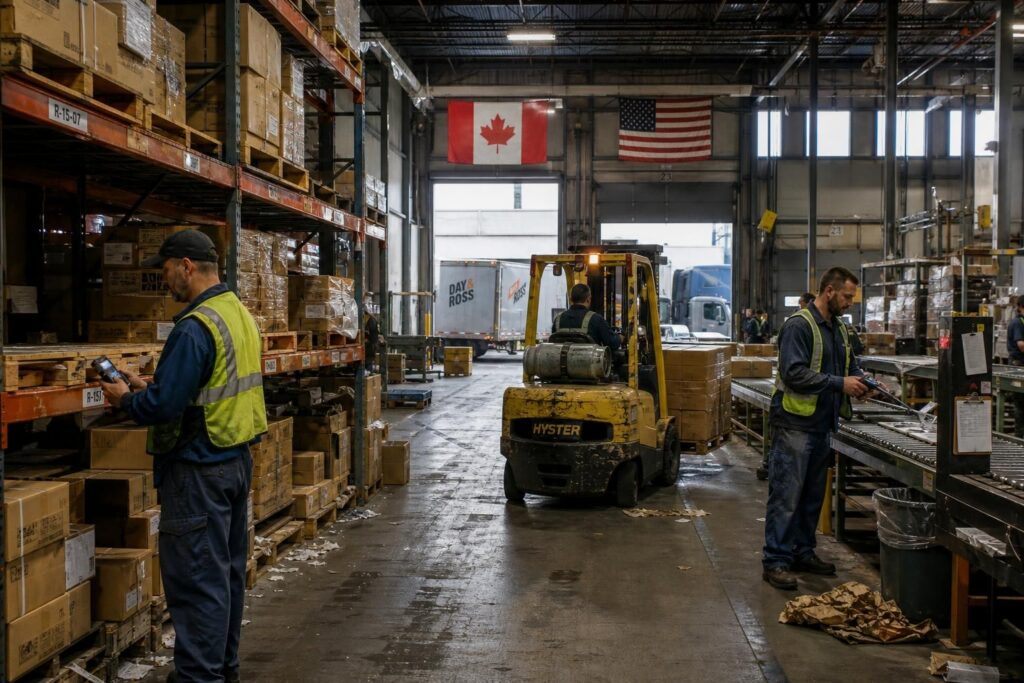
WELLAND ONT Ecommerce Fulfillment is a service where a 3PL near the border stores, packs, and ships your online orders to customers in Canada and the US. The 3PL also handles the customs steps that move your goods across the border legally.
WELLAND ONT 3PL services in 2026 usually cover warehousing, pick and pack, customs paperwork, returns, and freight. You pay for the space and work you use instead of running your own warehouse.
How Does Cross-Border Fulfillment Between Welland and Buffalo Work?
Cross-border fulfillment between Welland and Buffalo follows five basic steps. Your stock crosses the border in bulk, then ships to US customers from a Buffalo warehouse.
- Book the freight. Your goods leave Welland by truck, often as pallets on a less-than-truckload (LTL) shipment.
- Cross the border. A customs broker files the entry, and the truck crosses into Buffalo over the Peace Bridge.
- Receive and store. The 3PL counts your stock and adds it to its system. Goods can wait in a bonded warehouse or Foreign Trade Zone until they sell.
- Pick, pack, and ship. Orders flow in from your store, and the 3PL ships each one by parcel carrier.
- Handle returns. Returned items go back to the Buffalo warehouse instead of crossing the border again.
What Should You Have Ready Before You Go Live?
A go-live readiness checklist for cross-border fulfillment covers your paperwork, product data, and systems before the first pallet ships. Check off each item before you send stock to Buffalo.
- Customs setup: an importer of record (the party legally responsible for the import), a customs broker, and a tariff code (HS code) for every product.
- Product data: weights, sizes, country of origin, and proof of origin if you claim CUSMA (the Canada-US-Mexico trade deal) benefits.
- Store connection: your Shopify or other store linked to the 3PL, with a test order sent all the way through.
- Inventory plan: starting stock counts and reorder points for each product.
- Shipping rules: carriers, delivery speeds, and rates set up for US customers.
- Returns policy: a Buffalo return address and clear rules for refunds and duties.
Why the WELLAND-to-BUFFALO Corridor Is Ideal for Cross Border Ecommerce Fulfillment
The Welland-to-Buffalo corridor works for cross-border ecommerce fulfillment because of location. Buffalo sits just 10 minutes from the Peace Bridge, a direct gateway between Welland, Ontario and the US market.
The Peace Bridge carries a huge amount of freight. According to the Buffalo and Fort Erie Public Bridge Authority, which operates the Peace Bridge, more than a million trucks cross each year. That’s about 10,000 commercial trucks and 12,000 passenger vehicles per day, on a route linking the Greater Toronto area and the QEW with I-190.
Heavy bridge traffic means you should plan for busy days. Build a small buffer into your freight schedule so one slow crossing doesn’t delay your customers’ orders.
“Your location advantage transforms into a competitive edge when you partner with providers who understand cross border ecommerce fulfillment in this specific region.”
Highways like I-90 and I-190 connect Buffalo to distribution networks nationwide. Your WELLAND ONT cross border logistics plan gets quick access to the whole US road system.
Fulfillment costs drop in this corridor because shared 3PL services cost less than running your own warehouse. Warehousing expenses rose 2.6% nationally in 2025, so the Welland-to-Buffalo corridor’s shared model saves your business even more.
WNYFTZ manages over 4.5 million deliveries a year in Erie County. Lincoln Distribution and WNYFTZ both serve the Welland-to-Buffalo corridor with proven expertise.
Bonded warehousing and duty deferral programs cut your customs costs further, so you can put the savings back into growth. Call 716-823-2142 to learn how this corridor can power your move into US markets.
Trend #1: Faster Same-Day and Next-Day Delivery Into the US Market
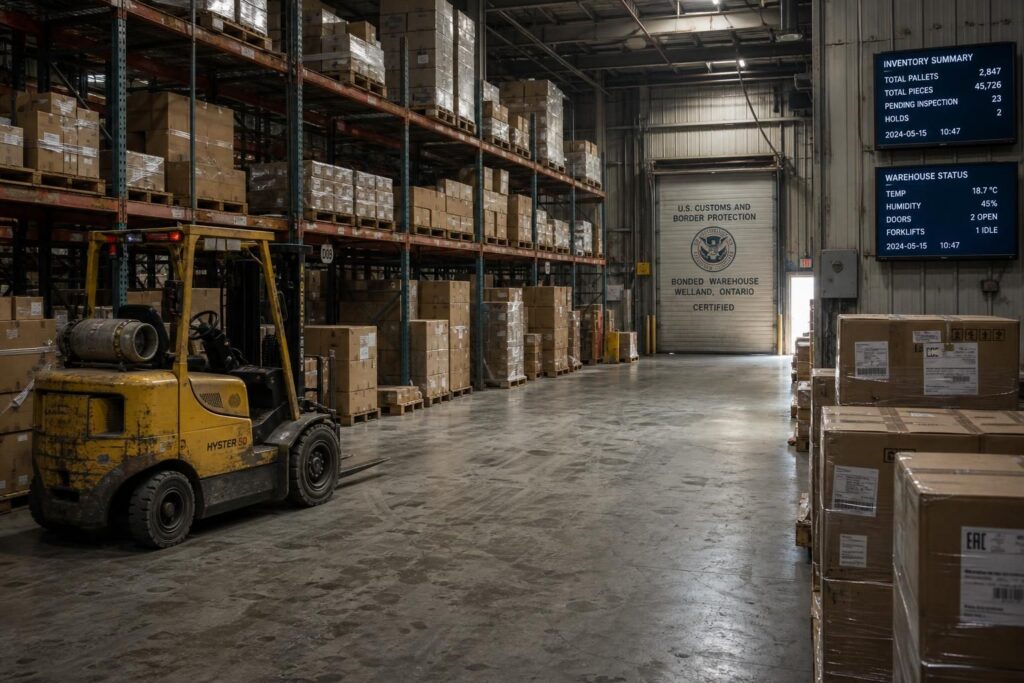
Faster same-day and next-day delivery is best for brands selling to US shoppers who won’t wait. A recent Capital One Shopping report shows that 74% of consumers expect online orders to arrive within two days.
How Does a Buffalo Warehouse Speed Up Delivery?
Buffalo fulfillment centers can deliver to most US cities within two days. Your WELLAND ONT cross border ecommerce fulfillment setup can meet that two-day expectation and protect your bottom line.
Warehouse placement makes a big difference. Using two regional warehouses cuts average customer distance by nearly 40%, and transit times drop with it.
| Warehouse Setup | Average Transit Time |
|---|---|
| Single warehouse | 2.29 days |
| Two regional warehouses | Just over 1.5 days |
Your WELLAND ONT 3PL services partner can place inventory closer to major US population centers. Decentralized inventory, meaning stock split across more than one location, lets you offer same-day and next-day options your competitors struggle to match.
Faster delivery also builds stronger customer relationships. Quicker delivery links directly to higher customer satisfaction, repeat purchases, and brand loyalty, plus better word of mouth.
Should You Ship by Parcel or LTL on the Welland-Buffalo Route?
Parcel shipping fits single customer orders, while LTL freight fits bulk moves of pallets. Many cross-border sellers use both on the same route.
| Carrier Option | Best For | Welland-Buffalo Example |
|---|---|---|
| Parcel carriers (such as UPS, FedEx, or USPS) | Small boxes going to one customer | Shipping a DTC order from Buffalo to a shopper in Ohio |
| LTL freight | A few pallets that don’t fill a whole truck | Restocking your Buffalo inventory from Welland |
| Full truckload | Large loads that fill a trailer | A big seasonal restock before the holidays |
A simple rule works well here. If it’s one order for one customer, ship parcel. If it’s stock moving between warehouses or to a retailer, ship LTL and pay only for the space you use.
Trend #2: Lower Customs Costs Through Bonded Warehousing and Duty Deferral
Bonded warehousing and duty deferral are best for brands holding lots of stock in the US, and they can cut customs costs by up to two-thirds. A bonded warehouse is a secure site where imported goods wait before duties are paid.
How Does a Foreign Trade Zone Save You Money?
A Foreign Trade Zone (FTZ) is a special area where imported goods can sit without paying US duties yet. Inventory stored in an FTZ is also exempt from state and local inventory taxes, which adds up to real yearly savings.
- Better cash flow: Duty payments don’t hit your account until goods leave the FTZ, so you can sell products before paying customs charges.
- Zero duty on some goods: Duties can disappear entirely if goods are re-exported or destroyed inside the FTZ.
- Lower fees: Filing weekly customs entries instead of one per shipment lowers your total Merchandise Processing Fees.
- Tax savings: Stock in the zone skips state and local inventory taxes.
FTZ benefits have research behind them. A 2025 study by FTI Consulting confirms that FTZ tax breaks greatly reduce tariffs, duties, and customs fees for cross border ecommerce fulfillment between WELLAND ONT and Buffalo NY operations.
What Does the Merchandise Processing Fee Cost Now?
The Merchandise Processing Fee (MPF) is a US customs fee charged on each formal entry, and new rates started October 1, 2026. According to CBP’s FY2027 user-fee notice published July 30, 2026, as summarized by Livingston International and Mohawk Global, the old $651.50 cap applied only through September 30, 2026.
| MPF Item | Through Sept 30, 2026 | From Oct 1, 2026 (FY2027) |
|---|---|---|
| Minimum per entry | $33.58 | $34.58 |
| Maximum per entry | $651.50 | $670.86 |
| Rate | 0.3464% | 0.3464% |
The higher cap makes weekly entries even more useful. Fewer entries mean fewer fees, each one capped at $670.86.
Your 3PL partner manages the customs paperwork for these programs. You can focus on growing sales instead of tracking border rules.
Trend #3: Reduced Fulfillment Costs With Cross-Docking Infrastructure
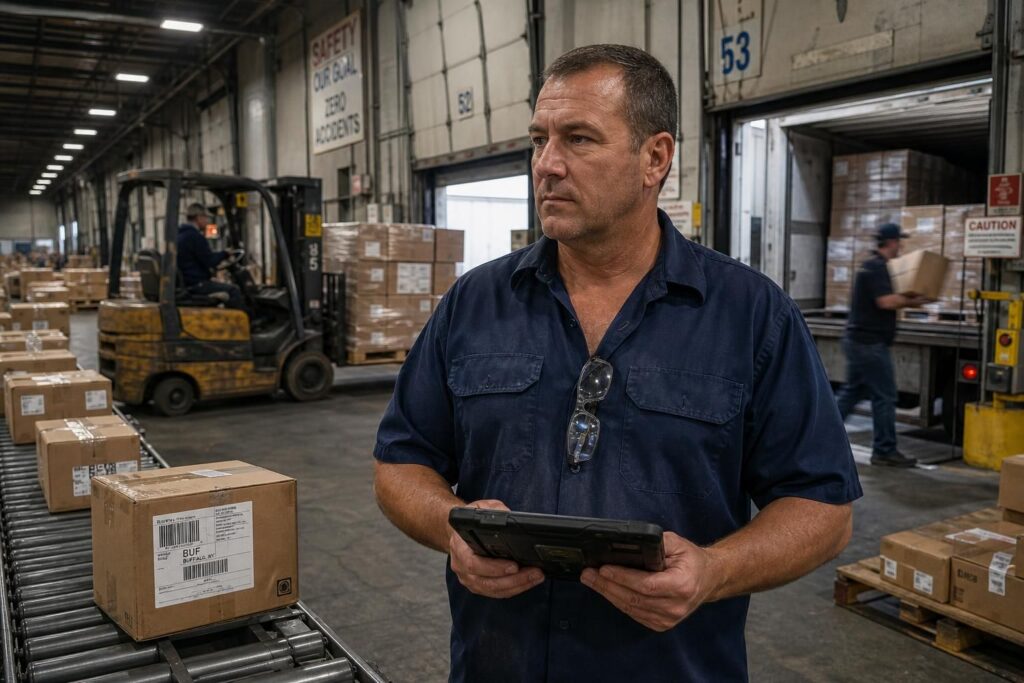
Cross-docking is best for brands selling time-sensitive or seasonal products, and FarEye 2025 data shows it can cut warehousing costs by up to 50%. The same data shows delivery speeds can improve by 40%.
Cross-docking means your products move straight from inbound shipments to outbound trucks. You skip extra storage steps, warehouse delays, and costly long-term storage fees.
Cross-docking also pairs well with shipment consolidation, which means combining smaller loads into fewer, fuller shipments. The savings show up in two places:
- Warehouse operation costs drop by an average of 18%.
- Space use improves by 20%.
Your inventory sits less, moves faster, and costs you less money. Real-time tracking gives you full visibility into every shipment as it flows through the facility.
Cross-docking helps most with time-sensitive or seasonal goods because minimal handling means faster turnover. Your WELLAND ONT 3PL services provider consolidates shipments and positions inventory closer to customers in Buffalo and beyond.
“Partnering with 3PL providers facilitates the effective implementation of cross-docking and shipment consolidation strategies” that directly impact your bottom line.
Cross-docking turns your WELLAND ONT cross border logistics into a lean, low-cost operation. Your customers get their orders faster, and you keep more of every sale.
Trend #4: Simplified Customs Clearance and Border Compliance
Simplified customs clearance is best for every Welland brand shipping into the US, because every commercial shipment now needs full clearance. Smooth customs clearance and proper border compliance keep your orders moving.
What Changed With US De Minimis Rules?
The US de minimis exemption, which let low-value parcels in duty-free, no longer applies to Canadian commercial shipments. According to PwC Canada and BDO Canada tax analyses of the US suspension, the US$800 exemption was suspended for all countries, including Canada, effective August 29, 2025.
All commercial shipments now face duties and full customs clearance regardless of value. Postal shipments follow a separate duty-collection process.
The change is also becoming permanent. The One Big Beautiful Bill Act permanently repeals Section 321 (the law behind the exemption) for commercial shipments effective July 1, 2027.
A Welland brand that used to mail small DTC parcels duty-free now needs proper entries for each one. Bulk shipping to a bonded or US-based 3PL is the simplest fix, since you clear goods in larger batches.
What Documents and Customs Steps Do Canada-US Shipments Need?
Canada-US ecommerce shipments need correct paperwork, a filed customs entry, and usually a licensed customs broker. Documentation, duty deferrals, and re-export processes all matter, and mistakes cost you time and money.
- Commercial invoice: lists what you’re shipping, its value, and who’s buying.
- Tariff codes (HS codes): standard product codes that set your duty rate.
- Proof of origin: needed if you claim CUSMA duty benefits.
- Customs bond: a financial guarantee CBP requires for formal entries.
- Customs broker: a licensed pro who files your entry and talks to CBP.
Clean paperwork matters even more at a crossing as busy as the Peace Bridge. One missing detail can hold your truck while traffic piles up behind it.
Why Does Your 3PL Partner Matter for Compliance?
Your 3PL partner matters because a knowledgeable one helps you stay compliant and avoid penalties. WNYFTZ gives expert guidance on customs rules so your shipments meet both local and international laws.
WNYFTZ can also take customs paperwork and border admin off your team’s plate. Proper clearance lowers your risk of fines, delays, and violations that could hurt your reputation.
Compliance belongs at the center of your WELLAND ONT cross border ecommerce fulfillment plan. Contact 716-823-2142 for a quote and see how simplified customs processes can speed up your growth.
Trend #5: Access to a Massive North American Consumer Base
Access to a massive consumer base is best for brands planning growth in both Canada and the US. The Welland-to-Buffalo corridor puts 40% of North America’s population within a one-day drive.
The Greater Toronto Area and Erie County, New York work together as a gateway to big markets on both sides of the border. Your cross border ecommerce fulfillment can serve Canadian shoppers in the morning and American customers by afternoon.
The corridor gives you a few clear wins:
- You reach millions of shoppers without long logistics delays.
- You expand into new markets without building a distribution network from scratch.
- You serve two countries from one strategic base.
- You gain a competitive edge that smaller competitors can’t easily match.
Your WELLAND ONT 3PL services can use the corridor’s existing roads, bridges, and warehouses to grow fast. Brands that use the corridor well turn a regional advantage into a continental one.
Trend #6: Omnichannel Fulfillment (DTC, Retail, Marketplace) Under One 3PL
Omnichannel fulfillment is best for brands selling through their own site, retail partners, and marketplaces at once. Managing fulfillment from several locations drains your resources fast.
What Does Omnichannel Fulfillment Under One 3PL Include?
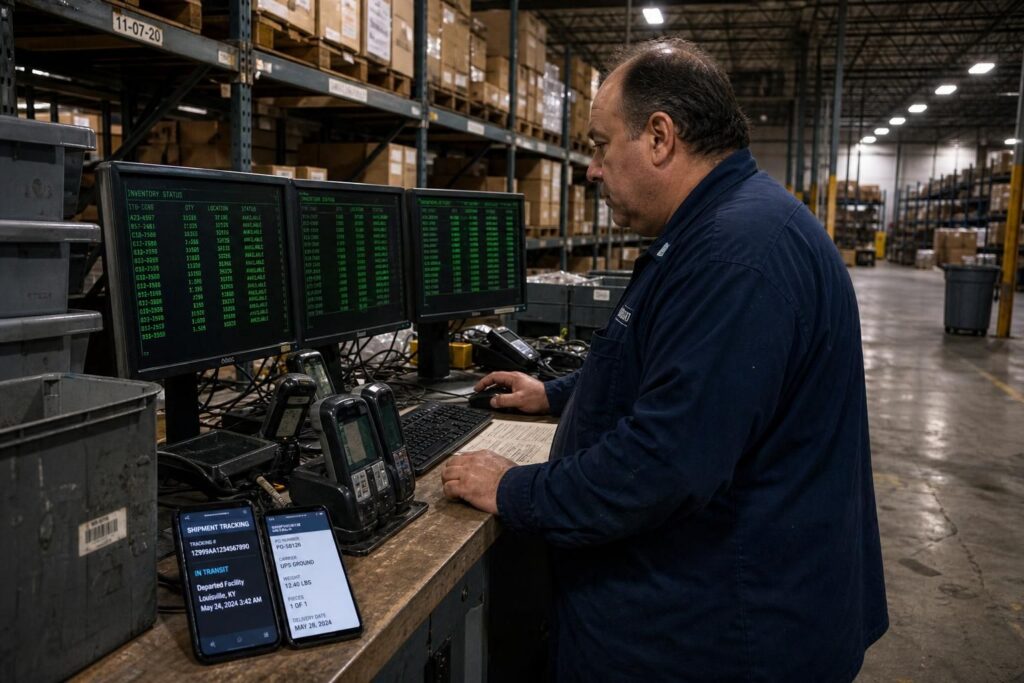
Omnichannel fulfillment under one 3PL provider puts every sales channel into a single system. Providers like Lincoln Distribution and Sam-Son Logistics connect your Shopify store, Amazon account, and retail orders through one dashboard.
Omnichannel inventory stays in sync across all channels, which prevents overselling and stockouts. Vendor-managed inventory programs keep stock levels right and speed up order processing.
WNYFTZ’s 3PL services cover a range of options that scale with your growth:
- Public warehousing: rent only the space you need.
- Vendor-managed inventory: stock levels managed for you.
- Freight brokering: help finding and booking trucks.
- LTL shipments: pay only for the truck space you use.
- Last-mile delivery: the final trip to your US customer’s door.
Shared 3PL models give you low-cost fulfillment without leasing a large warehouse. Your team sees inventory levels, order status, and shipment tracking across every platform, so you can focus on selling instead of logistics headaches.
Should You Use the Shopify Fulfillment Network or a Shopify 3PL for Cross-Border Orders?
The Shopify Fulfillment Network versus Shopify 3PL choice comes down to how much border help you need. The Shopify Fulfillment Network is a Shopify-linked program with set rules for every seller, while a Shopify 3PL is an independent warehouse that connects to your store and can add bonded storage, FTZ entry, customs broker help, and LTL freight. For a Welland brand shipping into the US, a border-based 3PL usually gives more hands-on customs support, but check Shopify’s current program terms first because features change.
| Factor | Shopify Fulfillment Network | Shopify 3PL Near the Border |
|---|---|---|
| Who runs it | A Shopify-linked program | An independent warehouse partner |
| Store connection | Linked to your Shopify account | Connects by app or API |
| Customs and bonded storage | Check current program terms | Can include FTZ, bonded storage, and broker help |
| Other sales channels | Focused on Shopify orders | Can handle Amazon, retail, and wholesale in one dashboard |
Trend #7: Real-Time API Integration and Inventory Visibility
Real-time API integration is best for brands that sell on several platforms and can’t afford overselling. Barcode-based pick and pack supports inventory accuracy above 99.5 percent.
How Does API Integration Stop Overselling?
API integration connects your store directly to your fulfillment warehouse. An API is simply a link that lets two software systems share data automatically, so nobody has to type orders in by hand.
API-linked orders flow from your sales channels into the warehouse management system the moment customers check out. Inventory counts update instantly on every platform, so you don’t sell products that are out of stock.
WELLAND ONT cross border ecommerce fulfillment providers like WNYFTZ use advanced warehouse management systems with real-time stock tracking. Links to leading ecommerce platforms mean automated order receipt with no delays or confusion.
What Tracking Do Your Customers Expect?
Sixty-four percent of customers require real-time tracking capabilities for online orders. Your business needs to meet that bar to stay competitive.
Real-time tracking sends your customers text and email updates from the moment an order ships until it reaches their door. Those updates build trust and cut down on “where’s my order?” emails.
What Does Real-Time Visibility Do for Your Business?
Real-time visibility shows you exactly what inventory sits in your Buffalo NY warehouse at any moment. Here’s what that gets you:
- Fewer errors: Accurate pick and pack services use barcodes to keep mistakes low.
- Early warnings: automated systems flag low stock before it becomes a problem.
- Less tied-up cash: you avoid overstock that locks up your capital.
- Smarter choices: you can see which products to stock and promote.
Visibility across your WELLAND ONT cross border logistics network cuts waste and speeds up your response to demand. You save money on fulfillment and keep customers happier at the same time.
Trend #8: Streamlined Reverse Logistics and Faster Returns
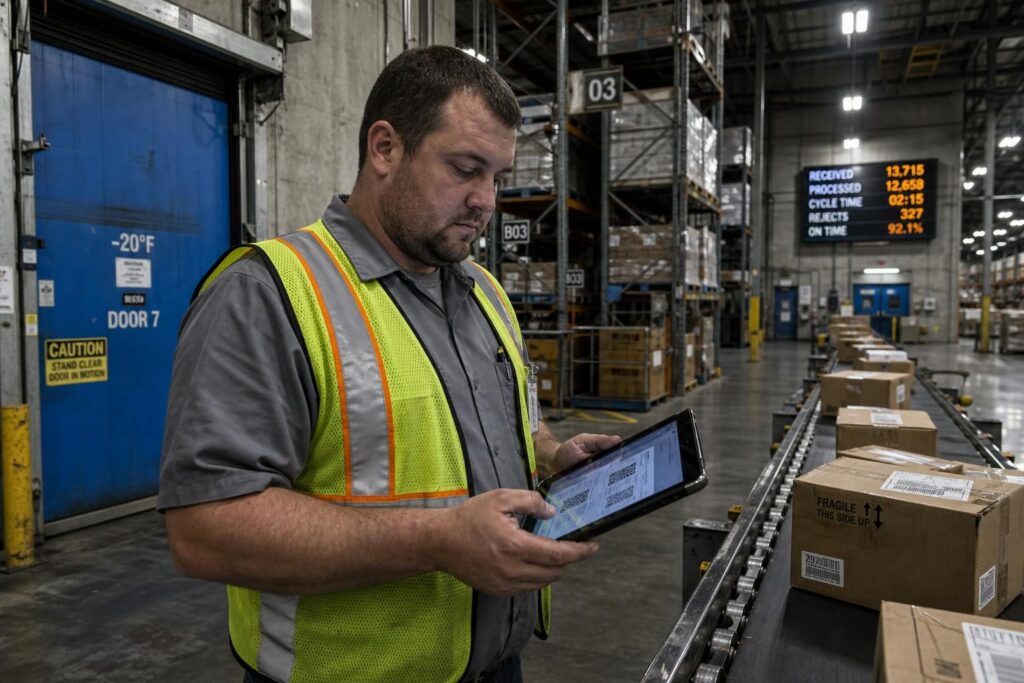
Streamlined reverse logistics is best for brands with frequent returns or temperature-sensitive goods, and cold storage is available for food, beverage, and pharmaceutical returns. Reverse logistics simply means moving products back from the customer to you.
How Does WNYFTZ Handle Returns?
WNYFTZ’s integrated 3PL solutions handle both outgoing and returned shipments. Trained staff process orders and returns quickly and accurately, from small parcels to full truckloads.
Return tracking works just like outgoing tracking. Real-time updates keep your WELLAND ONT cross border logistics team informed at every step.
Flexible 3PL services let you add capacity during peak return periods without long-term commitments. Faster returns processing means faster restocking and better inventory visibility.
How Are Duties, Taxes, and Returns Handled for Cross-Border Orders?
The end-to-end returns and duties process for cross-border ecommerce starts at import and ends when a returned item is restocked or sent back. Duties get paid when goods enter the US or leave an FTZ, so a US customer buying stock already in Buffalo gets a domestic shipment with no surprise fees at the door. Returns then come back to Buffalo, where your 3PL decides whether each item gets restocked, re-exported, or destroyed.
- Import: your broker files the entry, and duties are paid or deferred in the FTZ.
- Sale: the order ships from Buffalo as a US domestic parcel.
- Return: the customer sends the item to your Buffalo address, not across the border.
- Inspect: the 3PL checks the item and restocks it if it’s sellable.
- Re-export or destroy: for goods in an FTZ, duties can disappear if items are re-exported or destroyed there.
Taxes have their own rules. Ask your broker whether you can recover duties on goods sent back to Canada, and ask your accountant about US sales tax in the states you ship to.
Responsive customer service is available for time-sensitive shipments and returns. Call 716-823-2142 to talk through your WELLAND ONT 3PL services needs.
Why WELLAND Area Brands Choose WNYFTZ for Cross Border Ecommerce Fulfillment?
Welland area brands choose WNYFTZ because it combines Buffalo warehouse space with customs, FTZ, and cross-border shipping help in one place.
WNYFTZ knows the WELLAND ONT to Buffalo NY corridor well. Your brand gets a partner that understands cross border logistics and delivers lower costs, simpler operations, and faster delivery to your US customers.
Call 716-823-2142 For a Quote
WNYFTZ offers phone support for your cross border ecommerce fulfillment questions. Direct customer service specialists answer calls at 716-823-2142 to discuss your ecommerce fulfillment or 3PL services needs.
You get personalized assistance built around your business volume, not generic answers. WELLAND ONT cross border logistics experts listen to your goals and build a fulfillment plan that fits.
Specialists can walk you through bonded warehousing options, duty deferral programs, and cross-docking infrastructure that lower your costs. WNYFTZ puts a priority on rapid turnaround, so your quote arrives quickly.
Sharing your fulfillment challenges might open doors you hadn’t thought of yet.
Call 716-823-2142 today. The right WELLAND ONT Ecommerce Fulfillment partner can make your North American operations simpler, faster, and cheaper to run.
People also search for:
1. What are the top WELLAND ONT 3PL services in 2026 for online sellers?
The top WELLAND ONT 3PL services in 2026 include warehousing, pick and pack, returns handling, and customs brokerage. Many providers now offer same-day shipping into Buffalo, which is only about 20 miles away. These services help you reach U.S. buyers faster while keeping your shipping costs low.
2. How does WELLAND ONT cross border logistics help my business reach U.S. customers?
WELLAND ONT cross border logistics gets your products from Canada into the U.S. in less than a day using the nearby Peace Bridge. This crossing handles over 2 million commercial trucks each year, making it one of the fastest routes into Western New York.
3. What trends are shaping WELLAND ONT cross border ecommerce fulfillment right now?
Key trends include real-time tracking tools, expedited customs clearance through ACE (Automated Commercial Environment), and carbon-neutral shipping options. More sellers are storing inventory on both sides of the border to cut delivery times in half.
4. Who can I call to learn more about WELLAND ONT cross border ecommerce fulfillment?
Call 716-823-2142 to speak with a fulfillment expert about your shipping needs between Welland and Buffalo.
